
Why the First Five Years Matter So Much
Around Town | written by: KRISTEN BODENSTEIN, Owner, The Goddard School of Darien | photo by: BAMBI RIEGEL | riegelpictureworks.com
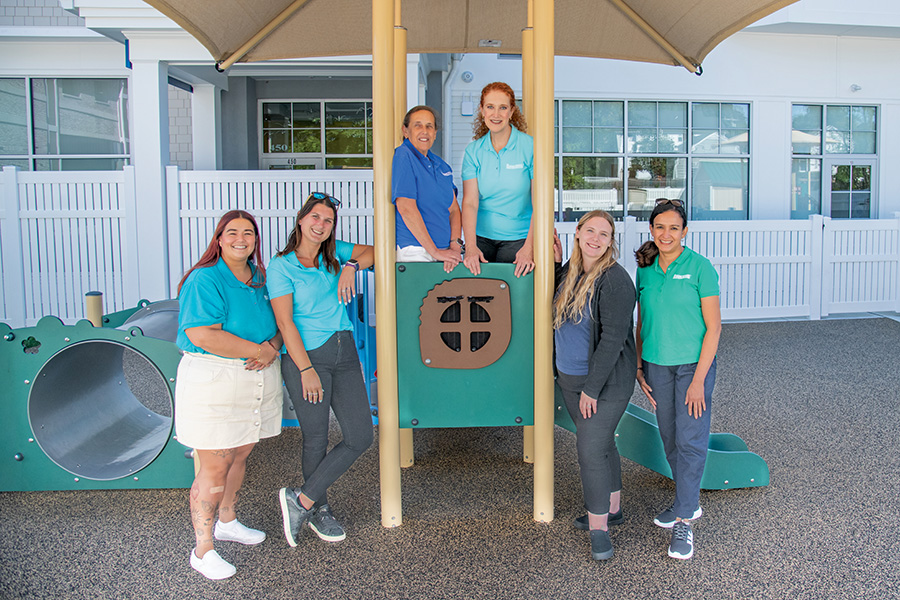
Members of the Goddard School’s dedicated staff of 40 early childhood educators in Darien (from left): Nicole Chandler, Assistant Director; Alex Sterck, Social Studies teacher; Pattie Burr, Curriculum Coordinator; Kristen Bodenstein, Owner; Alexis Pickering, Director; Johana Romero, Spanish teacher
THE FIRST FIVE YEARS OF A CHILD’S LIFE are filled with extraordinary growth and discovery. Research consistently demonstrates that these years represent one of the most important periods of brain development. We know this.
Shaping a Lifetime
What we may not realize is just how much the first five years can shape a lifetime: It is during this critical period that children develop foundational skills that will support their future academic achievement, social success and emotional well-being. Because, it is during the earliest years that children begin developing communication skills, emotional awareness, problem-solving abilities and positive social habits as they rapidly form neural connections that influence language acquisition, critical thinking, memory and social understanding. This shapes how they approach learning, interact with others and respond to challenges throughout their lives.
That’s why it is so important to support even our youngest children—infants even, with age-appropriate and engaging learning experiences and play that foster cognitive, social, emotional and physical development while encouraging them to explore their interests and natural curiosity.
More than Letters and Numbers
While many people associate early childhood education with learning letters and numbers, we know that when children work through a disagreement, welcome a new friend into play or persist with a task that’s challenging, they’re building skills that matter just as much as learning letters and numbers.
Just as important as academic growth is social-emotional development. Young children are learning how to recognize and express their emotions, build friendships, practice empathy and work through frustrations. These skills are essential for success both inside and outside the classroom.
Whether children are taking turns during a group activity, collaborating on a classroom project or learning how to resolve conflicts with guidance from trusted adults, they are developing important life skills. These moments help children build self-confidence, resilience and a sense of belonging while fostering positive relationships with peers and adults.
In addition, children of all ages benefit from exposure to foreign languages and music; and Preschool and Pre-K are not too early for Social Studies, handwriting and even chess. (We see just how much children gain from these in our own curriculum: We see the confidence they build, the creativity, communication skills and cultural awareness they develop.)
The Size of Small Moments
What often surprises families is that some of the most important learning happens in the smallest moments throughout the day. Every interaction matters—from a conversation with a teacher to a shared experience with classmates.
A balanced approach is especially important in today’s world, where skills such as communication, adaptability, collaboration and emotional resilience are increasingly recognized as essential for long-term success. By encouraging children to ask questions, work together and learn from both achievements and challenges, we can help cultivate a growth mindset that can benefit them far beyond their early years. These experiences help children develop the confidence to approach new situations with curiosity and independence.
By investing in each child’s academic, social and emotional growth during these formative years through enriching educational experiences, caring relationships and opportunities for exploration and discovery, parents can lay the groundwork for a lifetime of learning, confidence and success that can help children reach their full potential.
Editor’s Note: To learn more about early childhood education and the Goddard School’s wholistic approach to inquiry-based education and social emotional development, visit the GoddardSchool.com or call the Darien location in Noroton Heights at 203-636-0100.