The Story of McGuane
Our Town | written by: PETER SAVERINE Darien resident
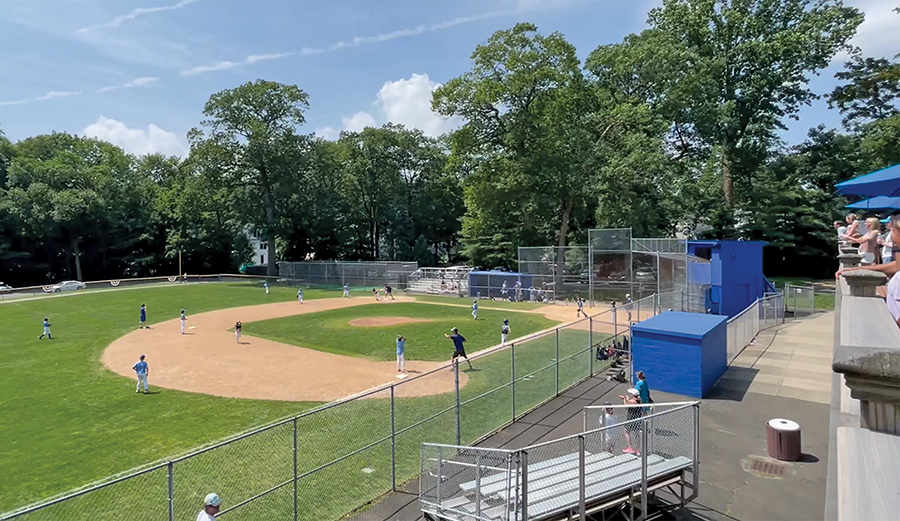
In springtime, the day begins early at McGuane Park—the 7.5 acres in Noroton Heights behind the fire department, and the heart of Little League in Darien.
Cars roll into the lot off Noroton Avenue as families arrive for the first games of the day. Teammates gather, balancing bats nearly as tall as they are while coaches carry buckets of baseballs toward the dugout. Parents, coffee in hand, greet each other, settling into the sounds of the season: the sharp pop of a ball hitting a catcher’s mitt, the rhythmic scrape of cleats on dirt, the chatter of young infielders. Beyond the trees, a Metro North train rolls through toward Manhattan, a reminder that even in a town closely connected to the wider world, some traditions remain reassuringly local.
For generations of Darien families, such is spring.
Yet the story behind the fields and amenities of McGuane runs deeper than some might realize. It is not simply a sports complex. It is the product of an earlier Darien, one shaped by immigrant families, parish life, volunteer labor and a shared belief that youth sports could strengthen the bonds of community.
It is a spirit that still echoes there today.
Darien Then
To understand McGuane, it helps to picture Darien as it was in the early 1950s when it was built.
The town was smaller, more tightly knit and Noroton Heights was home to many working families whose roots stretched back to the wave of Italian and Irish immigration that helped shape Fairfield County in the early twentieth century. Names like Calve, Frate, Vitti, Bruno, Lenihan and Lawrence were familiar on local streets where children spent long afternoons outdoors and pickup baseball games appeared wherever an empty patch of ground allowed.
Youth sports were not yet the carefully structured programs they would become. Instead, they grew naturally from neighborhood life, often guided by teachers, parents or clergy who believed athletics could help young people develop confidence and character. At the center of this early sports culture stood a parish priest who understood that instinctively.
Father McGuane and the Spirit of the Game
Long before a Park and its Little League fields carried his name, Father James J. McGuane, the pastor of St. John’s Parish in Noroton during the early 1900s, was one of the most influential figures in youth athletics in Darien. He had a gift for organizing teams, inspiring young players and bringing neighbors together around the baseball, basketball and football teams he formed, and devoted remarkable energy to it.
To Father McGuane, sports were never simply games. They were a way to teach discipline, teamwork and pride in one’s community. His enthusiasm became legendary. For many boys growing up in Darien in the 1920s and 1930s, Father McGuane was the person who first placed a baseball in their hands.
Years later, when Darien created its first Little League field and named it after Father McGuane, it felt like a natural expression of gratitude.
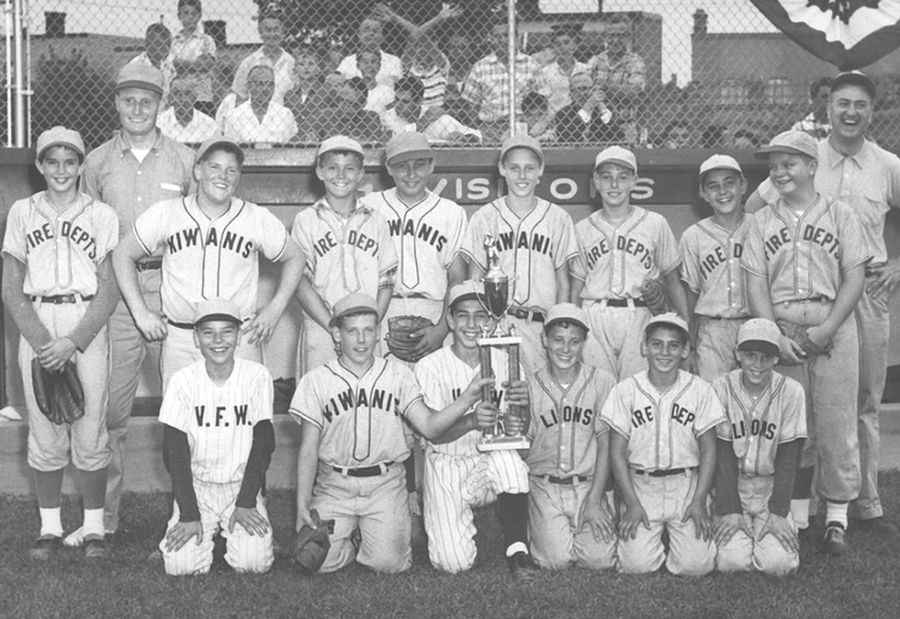
The 1958 Darien All-Star team after winning the state championship to advance to the Little League World Series
The Birth of Darien Little League
Little League arrived in Darien in 1952, when local baseball enthusiast and coach James “Hap” Holahan helped launch the town’s first season. The early games were modest affairs played on the grounds of what is now Darien Town Hall. Volunteers marked the diamond with chalk and rope. Despite these humble beginnings, enthusiasm grew quickly. Children signed up eagerly, and parents stepped forward to coach teams and organize schedules. It became clear that Darien Little League needed something more permanent than this makeshift field.
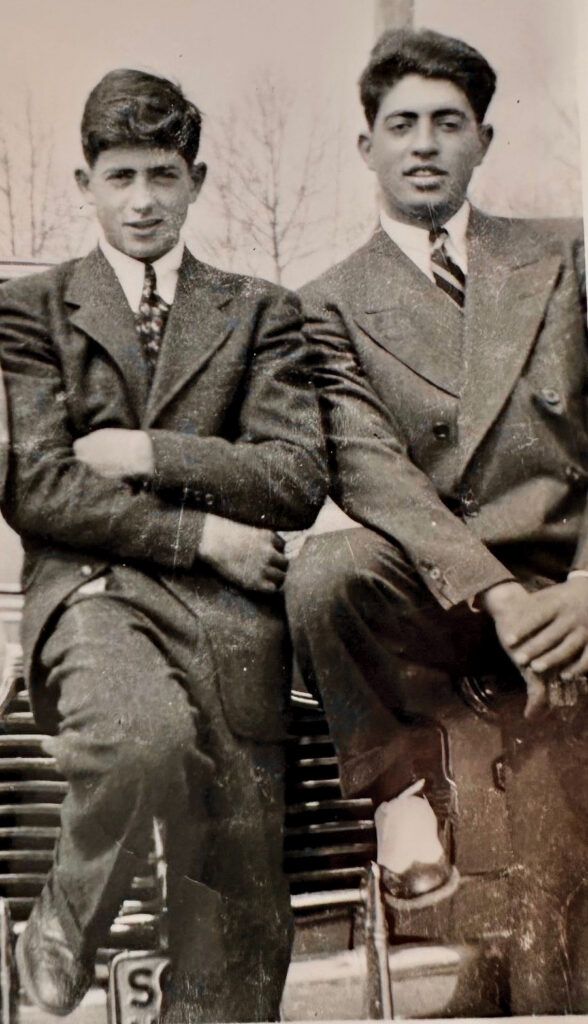
From left: Fred and George Calve, the brothers who made McGuane Park possible with their initial land donation | photo courtesy The Charlie Vinci Team at Compass
Field of Giving
Permanence became possible through the generosity of one of Noroton Heights’ most respected families when brothers Fred and George Calve donated approximately four and a half acres of land off Noroton Avenue so the new Little League could build a permanent field.
Little League now had the land. They needed a field. So after work each day, fathers and neighbors arrived with shovels, rakes, picks and wheelbarrows, clearing brush and leveling the ground by hand. They planted grass, shaped the infield and constructed the first backstop and bleachers. Some evenings, the work continued so late that volunteers relied on the headlights of parked cars to see what they were doing. By the early 1950s the work was complete.
Field of Dreams Come True
In 1958, just six years after Darien Little League began, the town experienced one of the proudest moments in its sports history when a Darien All-Star team captured the Connecticut state championship and advanced to the Little League World Series.
The roster included Rod Barker, McClean Russell Jr., Gilbert Brooks, Don Craig, Roger Frate, Dennis Lenihan, Joe Lopiano, Jimmy Lynch, David Stoeckle, Joe Miceli, Rodger Myers, Albert Siemering, Bobby Greenwood, Richard Reynolds and Patrick Pepworth.
Joe Miceli recalled the excitement of the team’s return. “The town’s people met us getting off the train at the Darien station and gave the players a parade in convertibles from the railroad station to the Darien Fire Department for a picnic lunch,” he said.
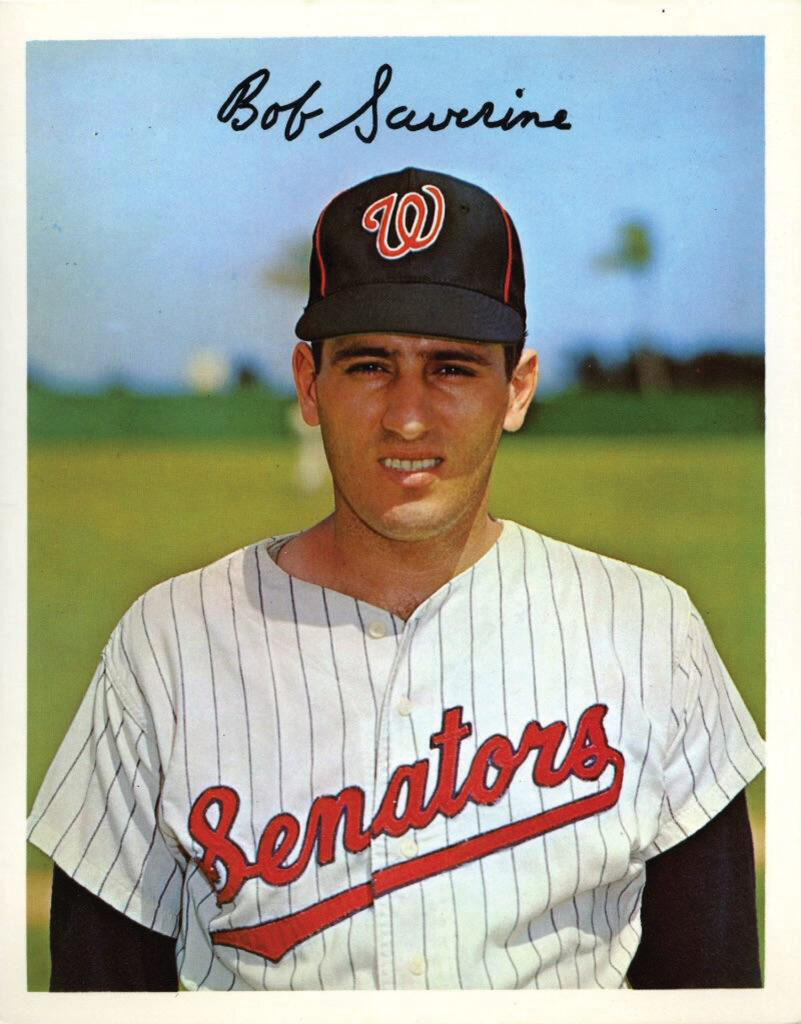
DHS graduate Bob Saverine who reached the Majors in 1959
Over the decades, a few Darien players have carried the town’s baseball tradition well beyond McGuane Park. Darien High School (DHS) graduate Bob Saverine reached the major leagues in 1959 with the Baltimore Orioles. Later, he played for the Washington Senators, following his cousin Charlie Saverine, who played in the Philadelphia Phillies minor league system, and his father Joseph Saverine, who starred in baseball and football at Georgetown University.
More recently, Darien native Emmet Sheehan rose from Fairfield County youth baseball to pitch for the Los Angeles Dodgers, while Darien’s Henry Williams was selected in the third round of the 2022 Major League Baseball Draft.
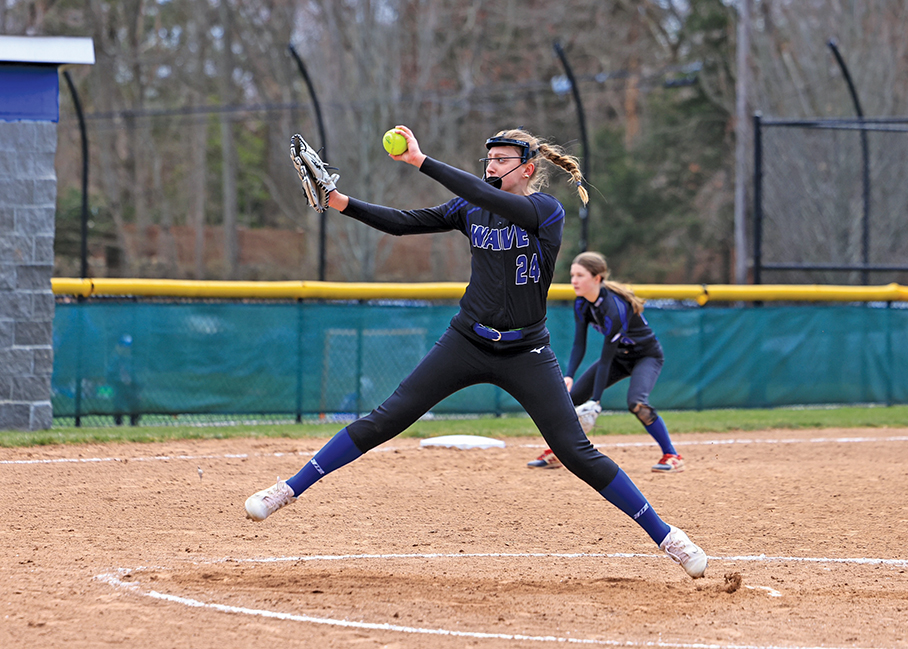
Darien’s Vivian Knott, the 1st-ranked left-handed pitcher nationally for 2027 | photo courtesy the Knott family
A Field for All
As girls softball has grown in Darien, McGuane’s diamonds have increasingly been shared by both baseball and softball programs. One of the most promising young athletes to emerge from the town’s program is DHS pitcher Vivian Knott, the 1st-ranked left-handed pitcher nationally for 2027, who has committed to play Division I softball at Stanford University. Other notable Blue Wave softball players in recent seasons have included Emma Hamilton, Claire Kissko, Lauren Valji, Callie McCloskey and Malin Medeiros, part of a generation that has helped elevate Darien’s presence in the sport.
One of the most inspiring chapters in the history of McGuane Park is the Challenger Division, a baseball program designed for developmentally and physically-challenged youth, brought to Darien 26 years ago by Charlie Santos-Buch and a team of volunteers.
Steve Zangrillo Jr., who helped coach the original Challenger teams, remembers the program as one of the most meaningful parts of Darien Little League.
“I loved to watch how the middle school and high school athletes volunteered to work with their peers with special needs as ‘Buddies’ to ensure they could swing the bat, run the bases, or be safe fielding a ball in the outfield,” he said. “The bonds of friendship they created were only dwarfed by the smiles, competitive spirit and teamwork that filled the field.”
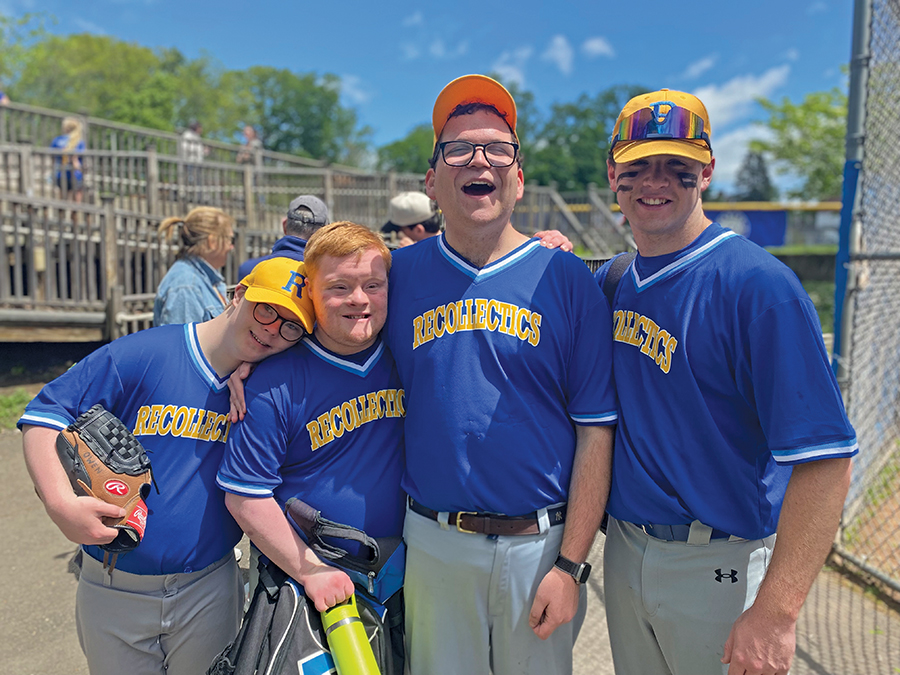
From left: Owen Carter, Ryan Bresnahan, Andrew Baylis and Peter O’Connor | photo courtesy Tricia Bresnahan
Field of Life
Knott credits McGuane Park with shaping her early love for the game, and teaching her much about life.
“McGuane Park is where my softball journey started, and it still feels like a second home to me. I began playing Little League there when I was eight, and it’s where I threw my very first pitch and fell in love with pitching,” said Vivian.
“Back then, I never could have imagined that one day I’d have the chance to play Division I softball at Stanford. What makes it even more special is that I still play at Darien High School with many of my same Little League teammates,” she continued.
“McGuane is where I learned to take risks, trust myself and handle both wins and losses, and it helped shape me not just as a player, but as a person, and I’ll always be grateful for that.”
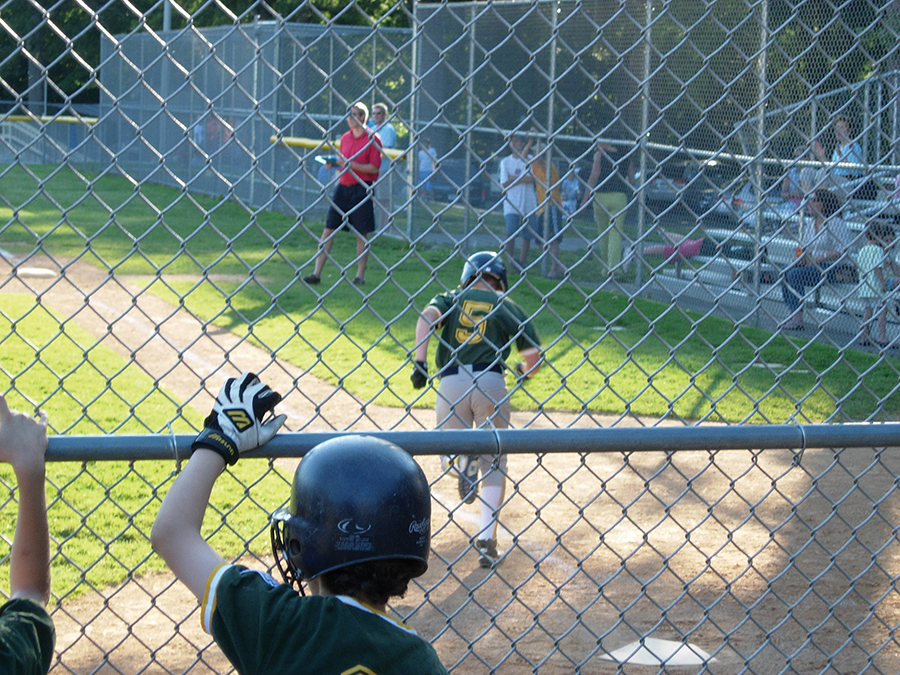
McGuane Park in spring – always a hit
The Field at Heart
In the end, the story of McGuane Field is not defined by championships or statistics. It is defined by community. A parish priest who believed in youth sports. Immigrant brothers who donated land. Volunteers who built a field by hand. Generations of Darien families who return year after year to coach, cheer and keep the game alive.
Subsequent acts of additional generosity have expanded that original land donation and first field to include another field, indoor training space and batting cages.
…and every spring, the story begins again.
The grass turns green, the bases are chalked and the first pitch echoes across Noroton Avenue—just as it has for more than 70 years.
…and the heart of the game beats anew in Darien.