
Tips for Painting the Outside of Your Home
House Tour | written by: NATALIE LANDRY, Brand Ambassador for Design and Décor, Ring’s End | photo by: BAMBI RIEGEL | riegelpictureworks.com
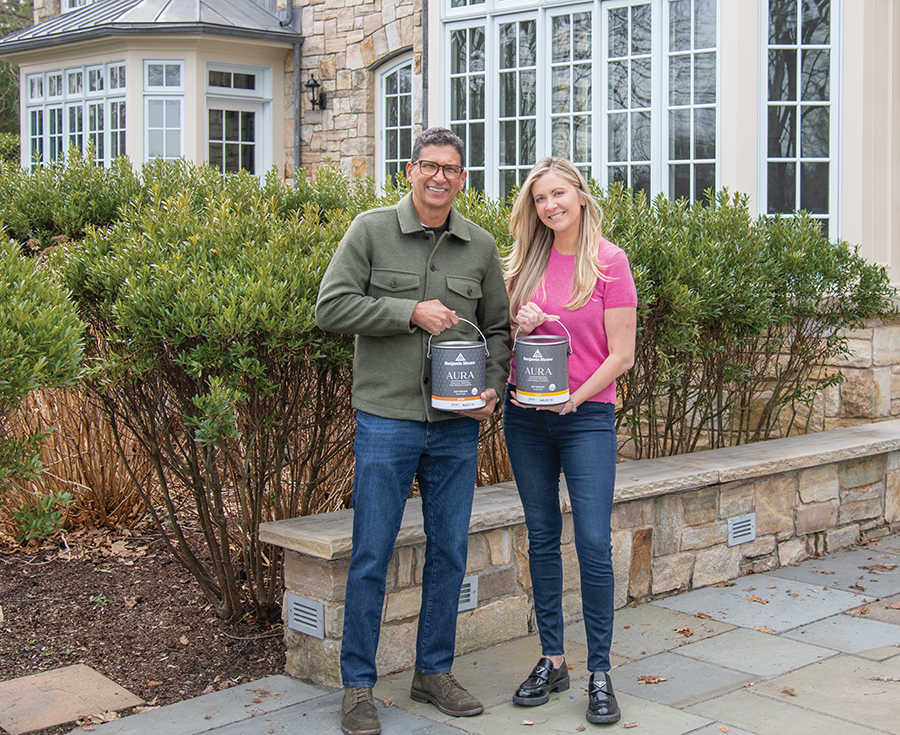
Above: Natalie Landry with Ricardo of Ricardo J. Painting, in Darien
It’s that time of year, you crushed dry January, you’re in the best shape of your life. (I’m projecting.) Now it’s spring and high time to take control of your most valuable asset. No, I’m not talking about your Nvidia stock, I’m referring to that beautiful home you reside in.
April marks the start of exterior paint season. Exterior painting not only maximizes the curb appeal of your home and boosts your property value, it also extends the life of your siding/shingles, and provides protection against weather and pests. So get outside, walk your property, and make sure Gossipy Gabby from down the street isn’t talking about your peeling shingles. To help, working with the absolutely fabulous Ricardo of Ricardo J. Painting—one of Fairfield County’s premier painters, we present these pro tips.
The Elements
Painting your entire home can be overwhelming. That’s why Ricardo breaks it down to three components: body, trim and accents (shutters and doors), in that order.
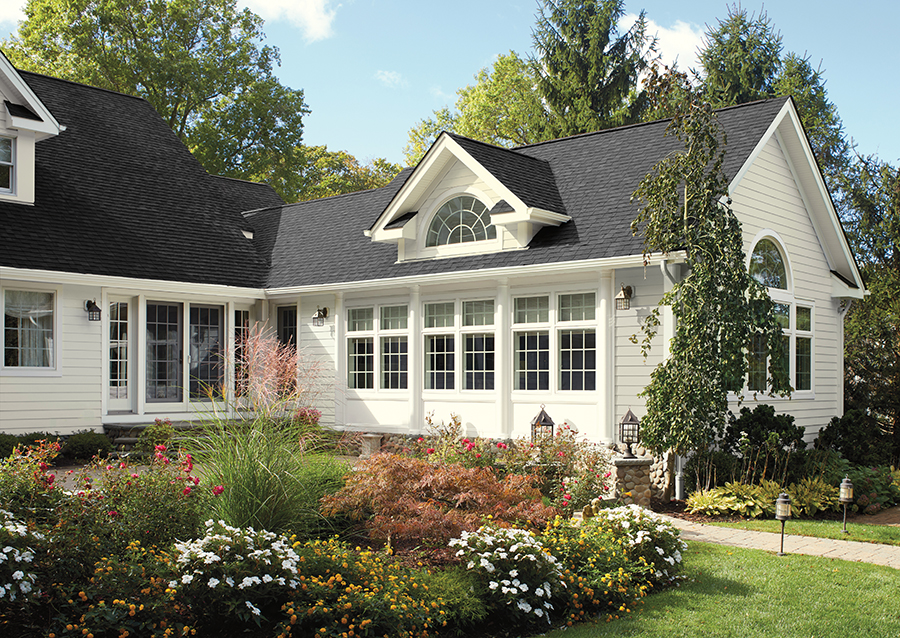
The ever popular white exterior. | photo courtesy Ring’s End
• The Body
The body sets the tone for your home. Whether it’s a classic colonial or a new modern build with black windows, white is the #1 color pick. “Four out of five customers in Darien are doing some sort of white,” says Ricardo. (This is Connecticut after all; You can’t pass three houses without seeing a white one.)
And what’s not to like? A crisp white leaves the house a blank canvas for a lush green lawn and pillared entryway to take center stage. White OC-151, Chantilly Lace OC-65 and Simply White OC-117 are timeless true whites. However, when choosing a bright white, it is important to consider the size of your home and its sun direction. For example, if you use Chantilly Lace on a 10,000-square-foot, south-facing house, it will be as blinding as a bad pair of veneers. In this case, save your neighbor’s vision by choosing a soft, creamy white such as Harwood Putty CW-5, Swiss Coffee OC-45 or White Dove OC-17.
The Gray Way: Gray creates a calm, balanced look for traditional homes or modern farmhouses. For a true gray house, Stonington Gray HC-170 (light, airy gray) and Coventry Gray HC -169 (medium silvery gray) give you a neutral shade of gray that leaves you with a wide range of color options for shutters and the front door. Gray can lean warm or cool depending on its undertones. Bone black CW-715 (a “griege”) and Carter Gray CW-80 (taupe hues) are great options for warmer grays.
The Blue Alternative: We wouldn’t be true to Darien if blues weren’t mentioned. Pelican Gray 1612 (a silvery gray blue) and Marina Gray 1599 (a deeper blue gray) are perfect cooler gray blue options. For the perfect true blue with a gray undertone, we like Wedgewood Gray HC-146.
• The Trim
The trim is considered the frame around the body of the house. Painting a contrasting trim in a much darker or lighter color really makes the architectural features pop. This works well for Modern and Victorian homes. A two-toned subtle contrast provides a delicate way to accent the curves and the edges of a home which works great for Cape Cod and Craftsman style homes. If you are choosing a white shade for the body of the house, you should keep the trim in the same white, just in a shinier sheen.
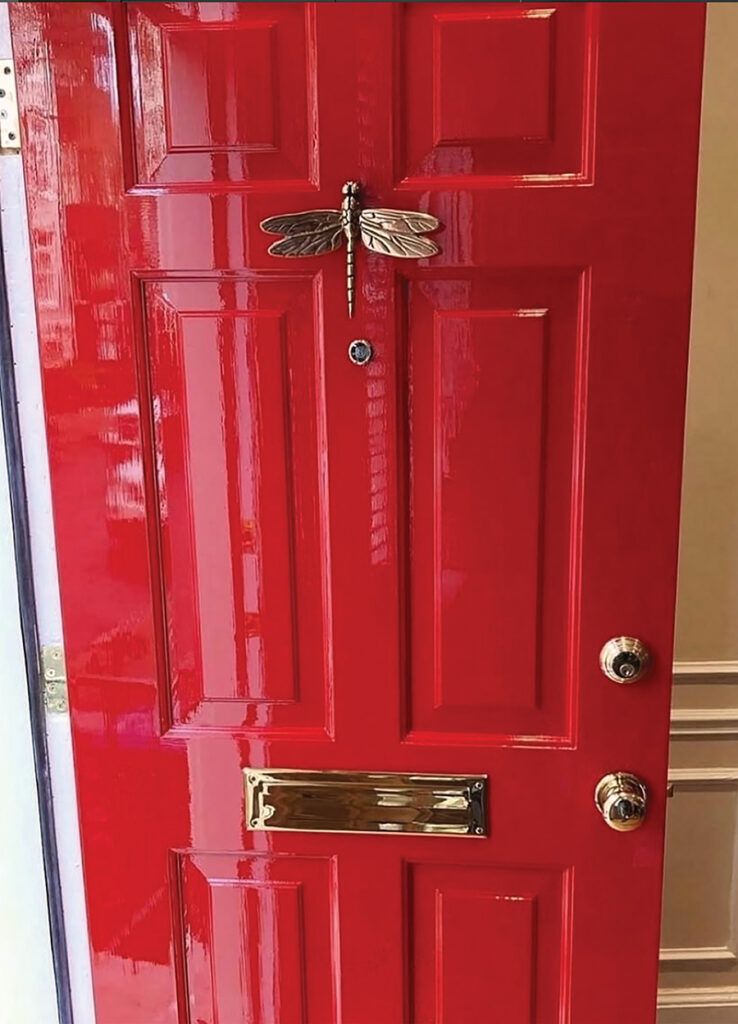
Shown here: Fine Paints Of Europe Brilliant in Red Tulip—a stunning lipstick red you’d see in any 80s music video. | photo courtesy Ring’s End
• Shutters and Doors: The Jewels of Your Home
The jewels of the home are the shutters and doors. This is where you can really express your creativity and personality. As with interior painting, the trend of warm tone on tones has been the rage. Edgecomb Gray HC-173 and Revere Pewter HC-172 for shutters are great options for that warm, earthy look that gives a softer-than-kitten contrast. Greens and blacks are still classic with Essex Green HC-188, Tarrytown Green HC-143, Narragansett Green HC-157 or Black HC-190 offering a traditional New England look.
Ricardo says a homeowner favorite for light blue shutters is Borrowed Light 235 by Farrow and Ball. A few other blissful blues for exterior include Water’s Edge 1635, Province Blue 2135-40 and Van Courtland Blue HC-145.
For front doors, “Navy’s are the most requested color,” says Ricardo. The Hale Navy/Newburyport Blue/Van Deusen blue strip is the most popular from the Benjamin Moore Historical Collection. Personally, I like Brush Blue CW-675, Gentleman’s Gray 2062-20 or Hague Blue 30 by Farrow & Ball for a more unique Navy.
Note: If looking for a refresh at a smaller investment, consider painting just the trim and accents.
The Biggest Flex
The biggest flex for a homeowner? Anything interior or exterior done in Fine Paints of Europe Brilliant. This one-of-a-kind product leaves a mirror-like reflection finish that gives off a stunning shellac look. Doing a front door in this finish warrants remarkable attraction in any color, the sight of it gives me full-on tingles. It’s an intensive multi-stage process to apply it and certainly not for people on an alligator arms budget, but it is well worth the investment.
Still feeling challenged with paint choices? Visit our Design Center at 181 West Avenue. Our talented and trained color consultants can walk you through colors, brands, sheens and everything in between!
Ricardo Says…
Always power wash the house before AND after prep (sanding and scraping any older paint and mildew) leaving a full 24 hours to dry prior to painting. Window sills are usually the area most in need of some TLC.
Paint above 50 degrees and below 85 or the paint will not bond to the surface.
Always use an oil-based primer.
Ricardo’s favorites: Woodluxe Solid Stain for the body and Regal Select in soft gloss for trim and Fine Paints of Europe Brilliant for a shiny front door
Always paint the house top to bottom.
Speaking of top, if you have a cedar shingled roof, it’s imperative to be proactive about treating it every five to six years, and always BEFORE painting your home or the edge of your roof will look like the side of an overflowing toilet. Yuck.